

Happiness. It’s the most universal and basic of human desires, driving our dreams, decisions, and aspirations. We all chase it throughout our life, yet often the thrill fades and we’re left wondering why we never found the lasting joy we expected. We are about to explore 10 models on the meaning and pursuit of happiness, by both philosophers long dead and modern authors who have looked into the topic for their own lives. I’ll then recommend how we obtain happiness based on this research.
This is our final post (for now) in our recent series exploring happiness. We encourage you to review our previous posts from this series: Equations for a Great Life from Scott Galloway’s Algebra of Happiness, How to Stop Stumbling on Happiness, How a Positive Mindset Results in a Happiness Advantage, and Solve for Happy: Engineer Your Path to Joy.
Ancient Greek Models of Happiness
Let’s begin with a review of several models of happiness from Greek philosophy.
1. Eudaimonia: Aristotle argued that happiness is not a fleeting emotion but a state of being called Eudaimonia, or “flourishing.” Everything in nature has a function, and the function of a human is to reason. A happy life is one of “virtuous activity in accordance with reason.”
Happiness from Eudaimonia requires a lifetime of practicing virtues (like courage, generosity, and justice). Happiness is an activity, not a state of mind, and you won’t be truly “happy” until your life is complete, as it is a measure of your total character and contribution.
2. Hedonism: The philosophy of hedonism, developed by Greek Philosopher Epicurus, seeks to achieve peace of mind (ataraxia) and the absence of pain (aponia). Epicurus believed we should maximize pleasure, but argued that the most sustainable pleasures are simple: friendship, a modest diet, and intellectual conversation.
While “hedonism” today implies excess, Epicurus’s model required limiting desires to what is natural and necessary. The greatest obstacle to happiness is anxiety (specifically, fear of death or divine retribution) and vain desires (like fame or excessive wealth). Solve for Happy appears to have some of its philosophical roots in the ancient definition of hedonism.
3. Stoicism: This ancient philosophy, popularized by Epictetus, Seneca, and Marcus Aurelius, finds happiness in virtue. Its central model is the “dichotomy of control” – some things are up to us (our judgments, impulses, desires) and some are not (reputation, external events). Misery arises when we try to control what is not ours to command. Think of the Serenity Prayer.

Happiness through stoicism comes from controlling your reaction to all events beyond your control. A stoic accepts external events with equanimity and focuses strictly on moral character. I have personally benefited from Stoic philosophy and recommend this practice to others.
Frankl’s Meaning-Making Model

4. Meaning-Making Model: Viktor Frankl wrote Man’s Search for Meaning in 1946 after surviving time in Nazi concentration camps. His happiness model suggests that humans are driven not by pleasure, but by a “will to meaning.” Happiness cannot be pursued directly; it must “ensue” as the unintended side-effect of one’s personal dedication to a cause greater than oneself.
Meaning can be found in three places:
-
- Work/Creativity (doing something meaningful)
-
- Love/Connection (experiencing something or someone)
-
- Courage (the attitude we take toward unavoidable suffering)
Even in the worst circumstances, we retain the last of the human freedoms: the Stoic’s ability to choose one’s attitude.
Flow for Optimal Experience
5. Flow Theory: Mihaly Csikszentmihalyi wrote Flow: The Psychology of Optimal Experience in 1990 to describe the feeling of peace and connectedness when in a “flow state.” Mihaly is a monk who often achieves the state of flow when in deep meditation. He notes that we all can achieve “Flow” when facing a challenge that perfectly matches our skill level. If the challenge is too low, we get bored; if too high, we get anxious. In the “Flow channel,” the ego disappears, and time distorts.
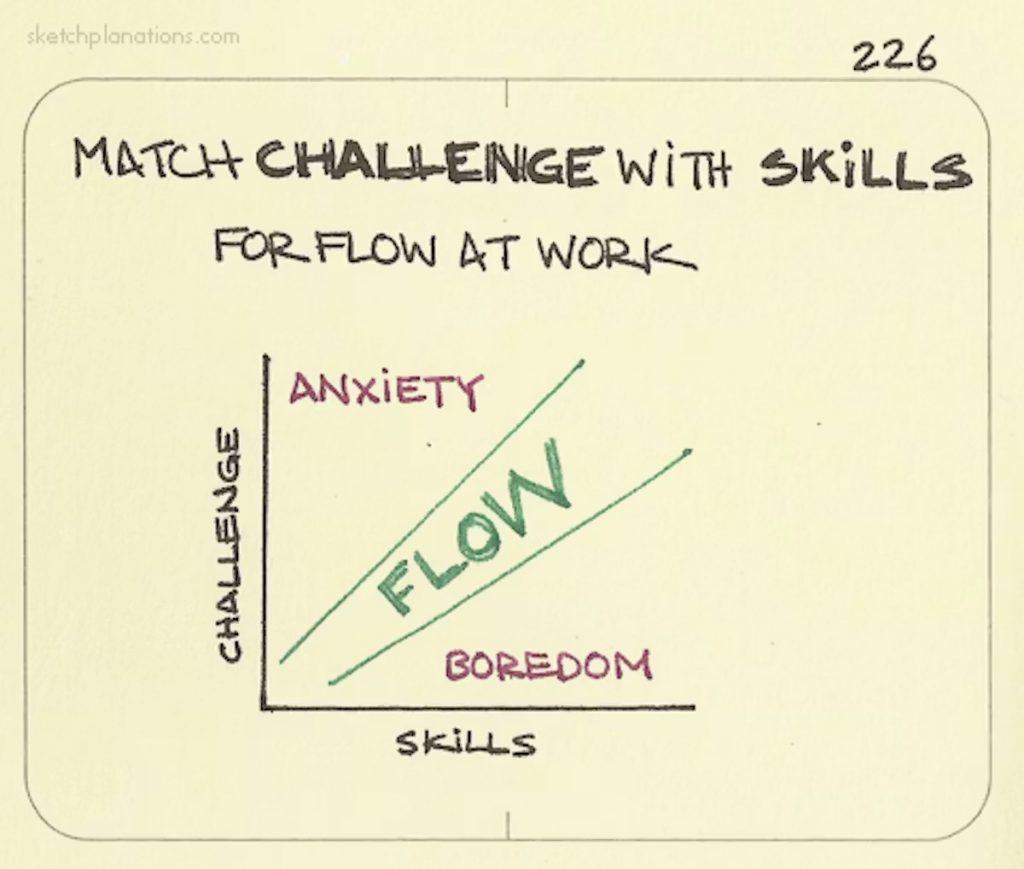
The best moments in life usually occur when a person’s body or mind is stretched to its limits in a voluntary effort to accomplish something difficult and worthwhile. A happy life is one filled with these self-rewarding experiences. I believe a focus on experiences in areas that align with your natural strengths will help you achieve flow in your life.
Seligman’s PERMA Model of Well-Being
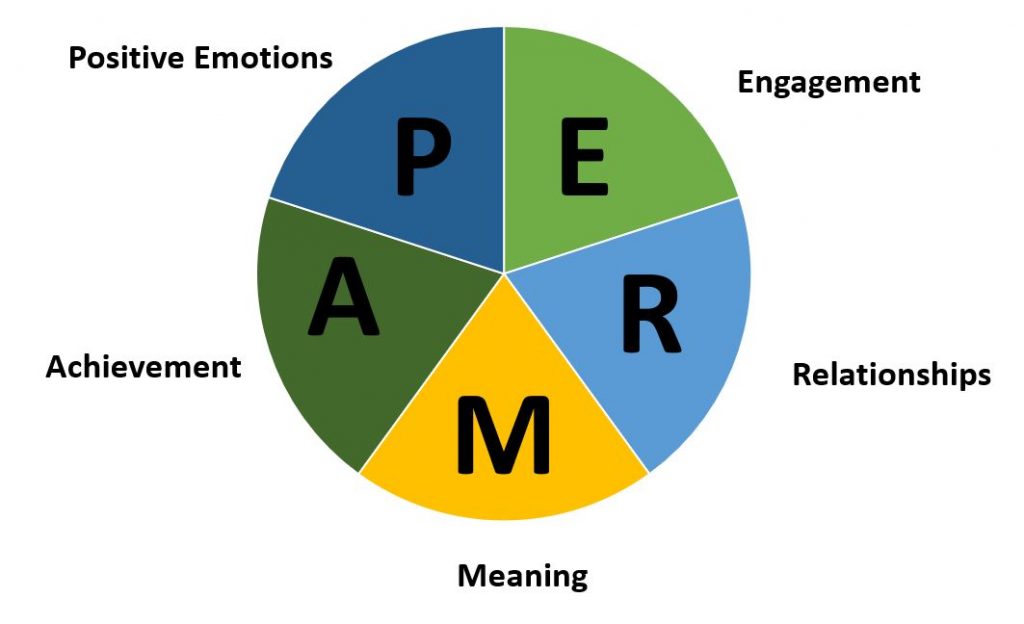
6. The PERMA Model: The father of Positive Psychology, Martin Seligman, described his model for Well-Being in the 2011 book, Flourish. PERMA is based on five measurable pillars that humans pursue for their own sake and is superior to “happiness,” which Seligman felt was too focused on cheerful moods. PERMA stands for:
-
- Positive Emotion – feeling good
-
- Engagement (flow) – see flow theory above
-
- Relationships – Connections are the key to happiness from a long-term Harvard study
-
- Meaning – virtue from Greek philosophy
-
- Accomplishment – achieving your goals
To “flourish,” you cannot just focus on feeling good – you must also cultivate achievements, deep connections, and purpose.
Self-Determination Theory
7. Self-Determination Theory (SDT): Edward Deci & Richard Ryan focus on human motivation in their 2017 work, Self-Determination Theory. They suggest that all humans have three innate psychological needs. When these needs are satisfied, we are self-motivated and happy; when they are thwarted, we are unhappy and passive. The three nutrients for psychological health are:
-
- Autonomy – feeling you are the author of your life and have some control
-
- Competence – feeling effective and capable (Rule 1 of our 10 Rules for Life will help you)
-
- Relatedness – feeling cared for
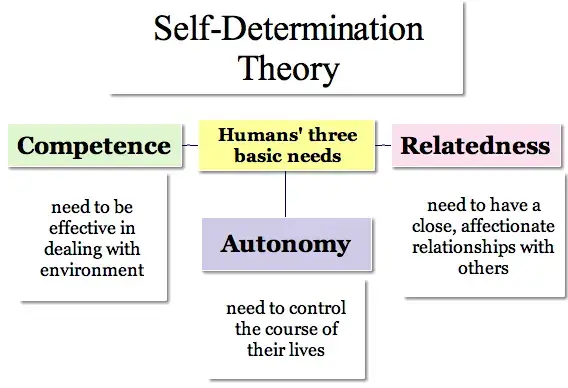
True well-being comes from environments that support these intrinsic needs rather than using external rewards (carrots and sticks).
The Happiness Hypothesis
8. Happiness Hypothesis: Jonathan Haidt wrote The Happiness Hypothesis in 2006 to combine ancient wisdom and modern science. Haidt uses the metaphor of the Elephant (our emotional, intuitive side) and the Rider (our rational, conscious side). The Rider thinks he is in charge, but the 5-ton Elephant actually runs the show (also see our post on Switch). Happiness comes from training the Elephant, not just lecturing it.
Haidt concludes that happiness comes from “between,” and is not fully internal (Stoicism) nor fully external. It arises from the right relationship between yourself and others, yourself and your work, and yourself and something larger than yourself.
The Sustainable Happiness Model
9. The Sustainable Happiness Model: Sonja Lyubomirsky shares her research on the determinants of happiness in her 2007 book The How of Happiness. She proposes a “pie chart” model: 50% of our happiness is genetic (our “set point”), 10% is determined by life circumstances (wealth, marital status), and 40% is determined by intentional activity.
Sonja finds that most of us focus on the 10% (getting a better car or a raise at work), which has a negligible long-term impact due to “hedonic adaptation.” Improvement and growth comes from focus on the 40% we control: our daily habits, cognitive strategies, and behaviors (like practicing gratitude or savoring life’s joys).
Some of her research overlaps with Daniel Gilbert’s Stumbling on Happiness. Half of our happiness is genetic, and we overestimate how happy a future event (like winning the lottery) will make us and how long that happiness will last. The biggest factor in human happiness is our original set point!
Dr. Happiness’ Source for Psychological Wealth
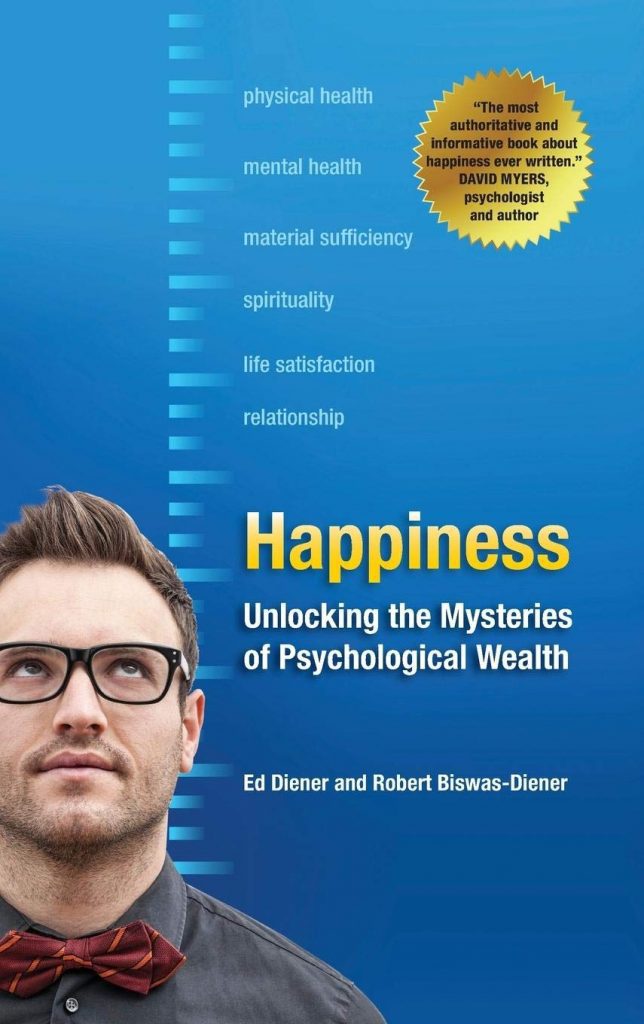
10. Psychological Wealth: Ed Diener (AKA “Dr. Happiness”) & Robert Biswas-Diener wrote Happiness: Unlocking the Mysteries of Psychological Wealth in 2008. They move beyond “subjective well-being” to the concept of Psychological Wealth and argue that being “rich” in life is a composite rather than being just about money or mood.
True wealth includes life satisfaction and feeling good, but also spirituality, meaningful social relationships, and physical health. A key finding is that while very poor people are unhappy, once basic needs are met, additional money does surprisingly little to raise psychological wealth.
How to be Happy
After reading multiple books, researching the happiest countries in the world, and exploring these ten additional happiness models, it is time for me to summarize my actionable takeaways. Here are a few key areas of focus:
-
- Life must have virtue and meaning. Generosity is important, and it is more effective to be generous with your time (doing things for others) rather than donating money to causes.
-
- Focus on areas you control. As Stoic thinkers and Steven Covey both taught, it is best to ignore areas of life you have no control over.
-
- Relationships matter, especially your partner and family. Remember that love is a verb – to feel love for another you must do loving things.
-
- Seek to maximize your total life enjoyment. This comes from maximizing positive experiences, and the earlier you gain your experience, the more you can benefit from it.
-
- Achievement is to be obtained regularly, not when looking back at the end of your life. Strive to reach states of flow where the challenge perfectly matches our skill level. A growth mindset helps you achieve moments of flow throughout your life.
-
- Your parents, where you are born, and life circumstances all matter, but not as much as your outlook on life. Smile often, find the joy in small moments, and practice gratitude for what you have. A positive outlook on life will provide you with a happiness advantage.
- Finally, to be happy, avoid what creates unhappiness. A few areas to avoid are:
- Social comparison. Avoid the feelings of inadequacy and envy in social media.
- Rumination (living in the past). Replaying past mistakes is unproductive and negative.
- Catastrophizing (fearing the future). Imagining worst-case scenarios creates anxiety.
- Perfectionism. While excellence is about growth, perfectionism is about fear of judgment and holding yourself to an impossible standard.
- Materialism. Material goods provide a quick dopamine hit but do not satisfy deep psychological needs.
- Being unhealthy or sick. You will be happy when you are feeling strong, healthy, and well-rested.
Summary
Please let us know about other happiness models that have influenced you and how you live your life and share your comments and questions below.