
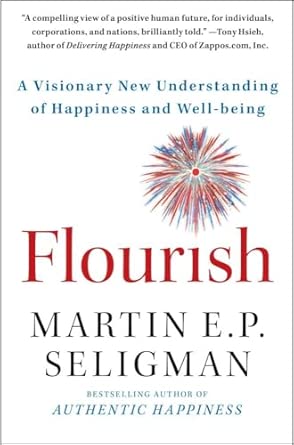
Last month we encouraged you to try 5 Simple Exercises to Increase Happiness and Well-being from Martin Seligman’s book Flourish: A Visionary New Understanding of Happiness and Well-being. Seligman is a practicing psychologist who has long studied the benefits of Positive Psychology. Flourish mentions several studies Seligman and others had undertaken to study the effects of positive thinking on longevity achieving amazing initial results. Since the book is now 15 years old, I decided to research the updated results of these studies to answer the question, does positive thinking result in a longer, healthier life?
Updated Studies
In Flourish, Martin Seligman outlined a vision for “Positive Health,” shifting the focus from simply curing disease to identifying “health assets” – psychological and social factors that prevent illness and extend life. Since the publication of Flourish in 2011, several of the massive longitudinal studies Seligman mentioned have yielded significant data.
Below is the updated research on findings in five different areas:
- Cardiovascular disease (CVD)
- General longevity and healthspan
- Cancer survival and quality of life
- Mental health diagnoses (PTSD, anxiety, and depression)
- Mortality linked to stroke, heart disease, and cognitive decline
Cardiovascular Disease (CVD) and Optimism
Seligman hypothesized that optimism was a “health asset” that could protect the heart. Massive meta-analyses from multiple studies conducted over the last decade have largely confirmed this.
A landmark 2019 meta-analysis published in JAMA Network Open (analyzing 15 studies with over 229,000 participants) found that optimists had a 35% lower risk of major cardiovascular events (like heart attacks or strokes) compared to pessimists.
Research by Laura Kubzansky (whom Seligman cites) suggests this isn’t just because optimists “worry less.” Optimism is linked to lower levels of fibrinogen (a clotting factor) and C-reactive protein (an inflammation marker), meaning the protection is biological, not just behavioral!
The “Exceptional Longevity” Study

Seligman discussed the idea that high well-being could literally add years to a lifespan in Flourish. A major 2019 study from the Harvard T.H. Chan School of Public Health (using data from the Nurses’ Health Study and the Normative Aging Study) found that individuals with the highest levels of optimism were 11% to 15% more likely to live to age 85 or older.
This effect remained significant even after controlling for health behaviors like smoking, diet, and exercise. This suggests that “flourishing” acts as a direct buffer against the physiological wear-and-tear of aging.
Cancer Survival and Quality of Life
In Flourish, Seligman was cautious but hopeful about the role of positive psychology in cancer. The updated research suggests a nuanced benefit to one’s quality of life rather than a direct cure.
While the research generally does not support the idea that “positive thinking” can shrink tumors or cure terminal cancer, it has proven highly effective in Post-Traumatic Growth. Recent studies (including this summary of 29 trials summarized in 2022) show that Positive Psychology exercises like gratitude and meaning-making significantly improve immune system function and treatment adherence in cancer patients. Patients using these techniques report lower levels of fatigue and pain, which indirectly influences long-term survival outcomes.
US Army: Comprehensive Soldier Fitness (CSF)
One of the most ambitious projects in Flourish was the US Army’s adoption of Seligman’s techniques to build resilience in soldiers. This evaluation report of the CSF2 program (the evolved version of the study) found that soldiers who received resilience training led by Master Resilience Trainers had significantly lower rates of mental health diagnoses (PTSD, anxiety, and depression) than those who didn’t. Perhaps the most surprising finding was a significant reduction in substance abuse among the “resilient” group, suggesting that these psychological tools act as a form of “preventative medicine” for addiction.
In case you are wondering, the Army training consisted of four primary “modules” or pillars:
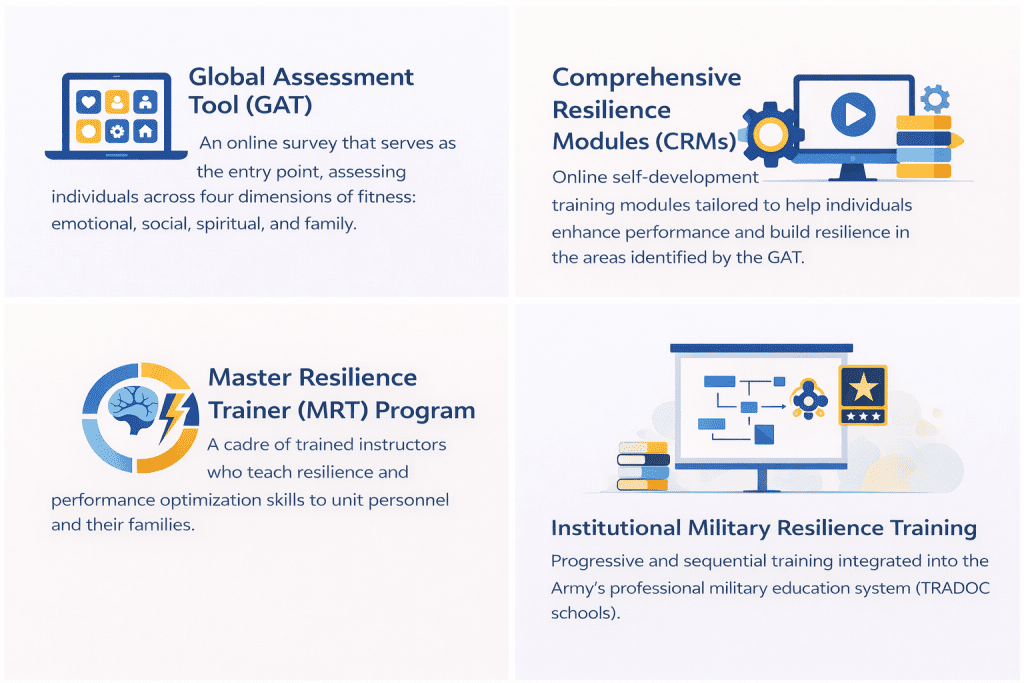
- Mental Toughness from The ATC Model, heavily based on Cognitive Behavioral Therapy (CBT).
- Character Strengths to identify their 5 signature strengths from the VIA Survey in Flourish.
- Strong Relationships based on the Active-Constructive Responding (ACR) exercise.
- Energy Management tools for regulating the physical body under high-stress conditions. This includes tactical breathing techniques and the Army version of the Three Blessings exercise.
Social Connection as a Health Asset

Seligman’s “R” in the PERMA Model represents Relationships and has been identified as perhaps the most critical health asset of all. A 2025 World Health Organization report identified social isolation as a “major global health threat” with a mortality impact equivalent to smoking 15 cigarettes a day! Conversely, high social connection is linked to lower risk of stroke, heart disease, and cognitive decline.
We have shared the long-term Harvard study previously that points out the importance of good relationships. And to experience love and be loved is one of our Rules for Life!
Summary
The data from the last decade confirms that well-being isn’t just a “nice-to-have” feeling; it is a measurable biological health asset. High levels of optimism can reduce the risk of major heart events by 35% and increase the likelihood of living past age 85 by up to 70%! These benefits aren’t just the result of “happy people” making better lifestyle choices. Positive thinking actually lowers systemic inflammation and slows the physiological wear-and-tear of aging.
With results like this, why aren’t more doctors sharing the benefits of positive thinking? Why isn’t everyone practicing the 5 Simple Exercises to Increase Happiness and Well-being we posted about last month? By intentionally practicing these exercises, you aren’t just chasing a fleeting mood; you are actively strengthening your immune system, protecting your heart, and building a foundation for a significantly longer, more resilient life.
I am happy that a Positive Mindset is one of my 10 Rules for Life. Please share your thoughts and comments below.