

Face flushed, jaw clenched, shoulders raised, and you haven’t taken a full breath in twenty minutes. We have all experienced racing thoughts and felt trapped in reactive loops. These automatic reactions are natural protective instincts, but they can be deeply unpleasant and lead to behavior that doesn’t reflect who we truly are. Though these reactions are not personal failures, how can we keep them from controlling the narrative of our lives? How can we learn to reset and respond with clarity?
In our last post, we discussed the simple practice of naming our emotions to improve emotional well-being and experience greater peace. As we get more practiced, we can identify emotions more quickly as they develop, sometimes in a fraction of a second. At the same time, our emotions also manifest physically in our bodies. Fear may show up as tightness in the chest or stomach, anger as clenched hands, and happiness as feeling alert and energetic. Because our emotions have a physical component, thinking alone may not bring us into a state of clarity. We also need ways to help our bodies regulate.
“Between stimulus and response there is a space. In that space is our power to choose our response.” – attributed to Viktor Frankl
This observation reminds us that between stimulus and response lies a subtle opportunity to pause. The physical body can be an entry point to accessing that choice and freedom.
Why the Body Leads and the Mind Catches Up
Through millions of years of evolution, our bodies have developed a fight, flight, or freeze response. Our brains constantly scan for danger to protect us in ways that don’t require conscious thought. This is incredibly important when we need to jump out of the way of a moving vehicle or catch our balance on an icy sidewalk.
When we perceive danger, our bodies release stress hormones, including adrenaline and cortisol. This response can begin before we consciously realize what is happening. As we make sense of the situation, our brains also take in signals from our bodies. Shallow breathing or clenched hands can reinforce a sense of danger and help keep the stress response going. The body and mind can become caught in a feedback loop, making it difficult to move through an emotion like anxiety.
The Body Can Help Us Pause for Clarity
Learning to Detect the Physical Manifestations
To help shift the signals from our bodies toward a sense of safety, we need body regulation skills. Because each of us experiences emotions differently in our bodies, it’s helpful to learn what happens specifically to you.
Think about a recent time when emotional overwhelm influenced your behavior. Perhaps you lost your temper at work, shot off a text message, or reacted quickly after receiving bad news.
Ask yourself: “What happened to my body?”
Start with your head and face, then move down your body in sections, recalling any tension or other sensations you noticed. Recognizing your own physical signals can help you notice an emotion before it begins to control your behavior. The more I practice this at home, the better I can notice my body changes in the moment. Often, I take mental notes and reflect on them later for practice.
Breathe into a Calmer Body and Mind
When emotions begin to rise, start with something simple: breathe and release.
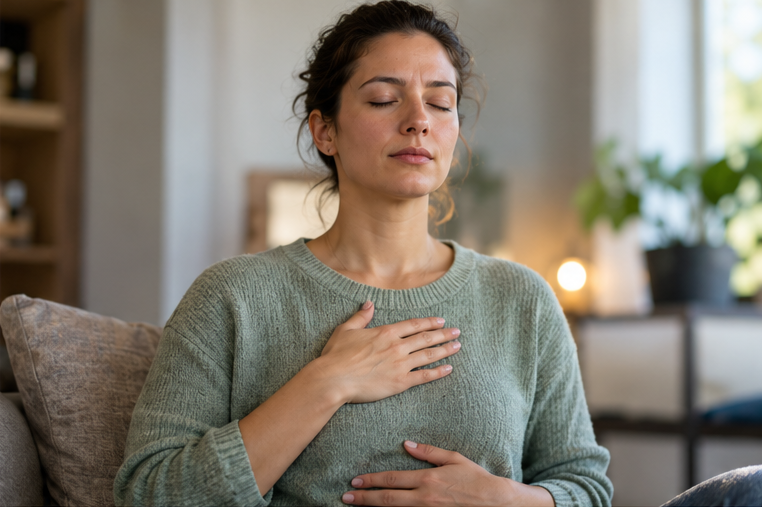
- Inhale slowly through your nose, then let your exhale lengthen gently.
- As you breathe out, notice where you’re holding tension.
- Unfurrow your brow, unclench your jaw, and let your shoulders drop away from your ears. Allow your face to soften.
This has been the most effective practice for me in creating a little space between feeling an emotion and reacting to it. Sometimes I notice my body responding to stress before I can put what I’m feeling into words. In those moments, my breath gives me somewhere to begin.
I can return to this practice in a meeting, during a difficult conversation, or while going about my day. I don’t have to step away or figure everything out first. I can simply take a breath and give myself a moment.
Practicing during calmer times helps make that pause more familiar when you need it. To begin:
- Notice the air moving in and out of your nostrils.
- Allow a quiet moment without forcing your mind to be empty.
- Stay with that moment for a breath or two.
- When your mind wanders, gently bring your attention back without criticism.
- Notice any tension with curiosity, and see whether it softens as you exhale.
Bringing the Practice into Daily Life
Building this practice into your day can start with small, consistent habits. Connect an intentional breath or body regulation technique to something you already do:

- Before opening an email you expect to be stressful, rest your hands open for a few seconds.
- While waiting at a red light, take one gentle breath and relax your jaw.
- When you pause for a sip of water, notice your shoulders.
- Before walking into a meeting, check in with your body and soften any tension you find.
Everyday frustrations can become opportunities to practice. You may still feel irritated, anxious, or overwhelmed. The practice is to notice what’s happening and give yourself a little more room to choose your response.
Small Steps toward a Deeper Calm
For me, learning to feel more at ease in my body has meant finding a place I can return to, even when the world around me feels unsettled. Some days that return comes easily. Other days, it takes more patience. One of the core principles of Kaizen is action over perfection, and it fits this practice well. A single breath, a relaxed jaw, or a moment of noticing is a small action worth taking.
Our emotions offer valuable information about what matters to us and what we might need. They also shift, and no single feeling tells the whole story. Pausing gives us time to listen and consider how we want to respond. With practice, we can become more familiar with the connection between our minds and bodies, noticing how it changes and what helps us feel grounded. We can begin again with one breath, one small release of tension, and one moment of kindness toward ourselves.
We hope you found this helpful. As you move through your daily interactions, let this be a gentle reminder to pause and find your breath. In our next post, we’ll explore the next step in this process: how to respond from our values rather than react from our emotions.